Tuesday, January 17, 2006

As 'Today' Abandons Its Flirtation With 'Boogie-Woogie' And Returns To Its Tedious Best, Is There Finally An Answer To The West Lothian Question?


It was with some trepidation that I tuned into Radio 4's Today programme this morning. In recent days, this programme has resembled an aural edition of Disco 45 magazine, blasting out jitterbug music to an unsuspecting audience. As a result, I now find myself fully cognisant of the works of Mr Paul Weller and the Arctic Monkeys, though I am at a loss to understand how my life has been enhanced by such knowledge.
This morning, thank goodness, the programme was back to its reassuring, tedious best, with a joint interview between Sir Malcolm Rifkind and a gent from the shires, who may have been Mr Charles Moore, the former editor of the Daily Telegraph. Equally, it could have been Sergeant Wilson from Dad's Army. (If I knew what a "podcast" was, I would be able to check this fact, but I am not sure that my trusty Roberts R505 is capable of dealing with such things - it still refuses to accept that FM is not called VHF).
The two gentlemen were on hand to debate Mr Tam Dalyell's hoary chestnut, the West Lothian Question. The WLQ, as it is known amongst aficionados, is notable in that it is possible to debate the answer without ever mentioning what the question was. This obfuscation conspires to prolong the debate, and to mask the fact that the WLQ is a question as enigmatic and unanswerable as the riddle of the Sphinx. One might as well ask "why is a sparrow?" whilst wearing a tweed balaclava.
In my experience, there are two West Lothian Questions. One is "what are you looking at?" and it is usually delivered before one is assaulted at a bus stop. The other - often delivered moments earlier - is "sauce or vinegar?"

Sunday, January 15, 2006

In An Election Of The Witless, Mr George Galloway Has Proved Less Unpopular Than A 'Page 3 Trollope'. But Is He Losing The Plot?


Since the beginning of the television freak-show Big Brother, politicians have looked on enviously at its ability to capture the attention of the younger generation, who are - it seems - happy to vote to humiliate or reward televisual idiocy, but unwilling to visit a polling station in order to select a member of parliament.
Personally, I do not see this as a crisis of democracy. The obvious solution - legislate to suit the needs of those who can be bothered to vote, and thus prompt the indolent into considering their electoral disadvantage - has, oddly, not been adopted by any of the main political parties. Instead, they attempt to pander to the foolish and the disengaged, thus punishing the intelligent, active electorate. Hence the streets are awash with under-dressed urchins, drinking "alcopops", smoking jazzy cigarettes, and generally behaving as if there is no greater imperative in life than the urgent need to share sexually-transmitted diseases to a soundtrack of tinny ringtones from their mobile telephones.
If this behaviour is a religion, Big Brother is its church. So, while I understand the desire of the MP for for Baghdad East, Mr George Galloway, to enter into the lion's den, I am not convinced that he has a full understanding of the dark forces with which he is dealing. If Mr Galloway seriously thought he could win over the affections of the apathetic, disaffected, self-centred, materialistic, chemically-altered, hormonal nitwits who worship at the altar of cheap celebrity, he should have been reminded of the Presybterian maxim: "never argue with an idiot".
Politicians cannot be expected to comprehend reality television. It takes a dramatist to understand that it has nothing to do with reality, but is, in fact, a form of improvised drama. In these circumstances, it is hardly surprising that its participants contrive to lose the plot.
Nevertheless, I worry for Mr Galloway. At some level, he seems to be taking too seriously the democratic aspects of the game. On Friday night, having surived an eviction vote, he was heard telling Ms Rula Lenska (his paramour in this plotless farrago) of his relief at proving less unpopular than a "page 3 trollope".
Without irony, Mr Galloway observed: "I said to Big Brother, 'I beat Roy Jenkins. I beat Oona King, I don't want to lose an election to Jodie Marsh."

Friday, January 13, 2006

A Big Brother Contestant's Thought For The Day, Whilst Attempting To Resolve An Argument About Quorn With Mr Michael Barrymore

"Think of all them homeless people that would love to be in here." - Chantelle, the non-celebrity on Celebrity Big Brother.

Tomorrow, as if to grant her wish, Sir Jimmy Savile will enter the house, an event that is likely to overshadow even the sight of Mr George Galloway MP pretending to be a kitten, and purring as he licked imaginary cream from the hand of Ms Rula Lenska.

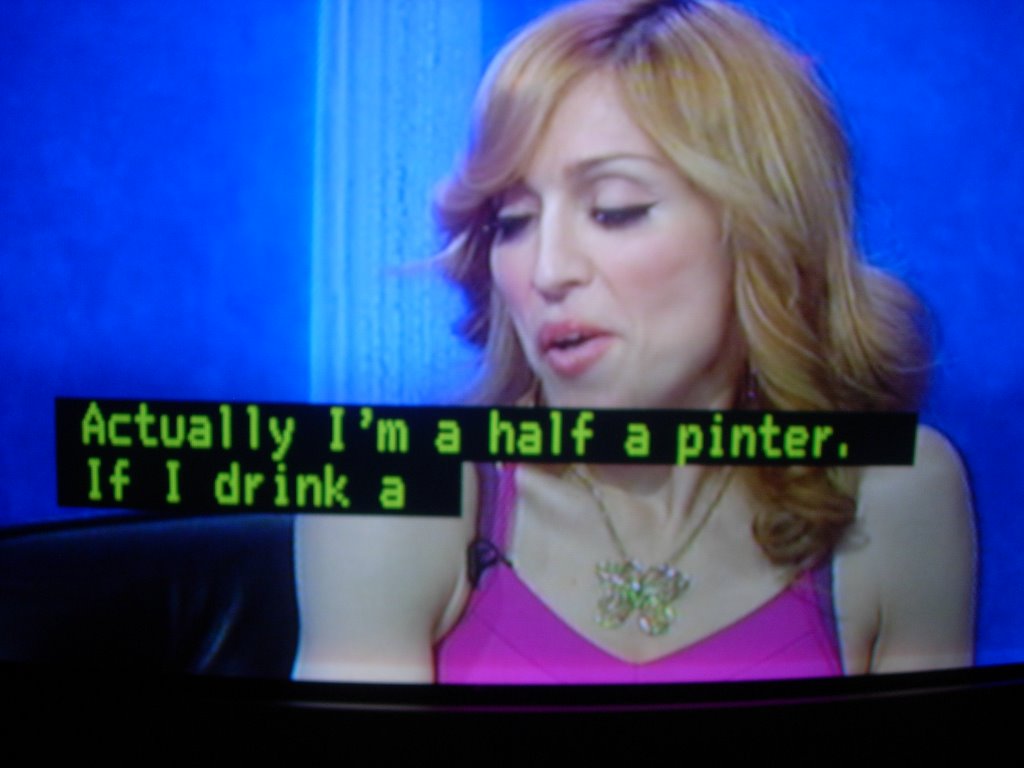
Ms Madonna Ciccone's War On Terroir


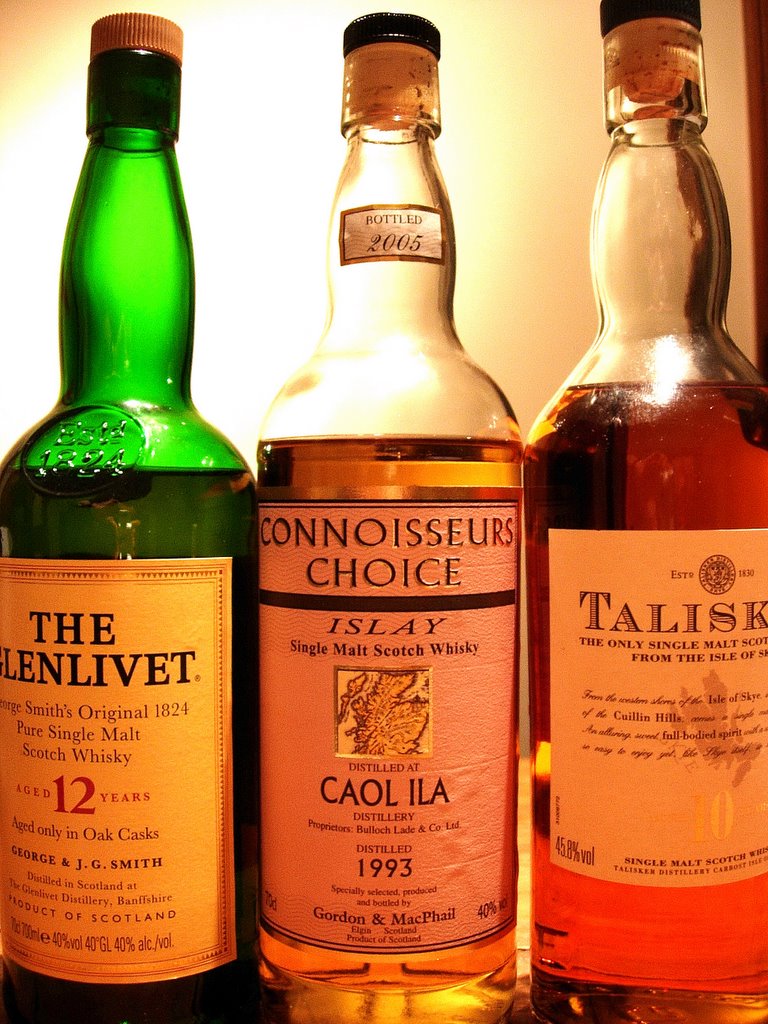
As a relative newcomer to the world of alcoholic decrepitude, I am something of a naif in the matter of drink-related snobbery. But there are some things I do know. I understand, for example, that the American man I overheard explaining malt whisky, and whose tutorial included a glowing tribute to a tipple called "Paddy", was looking at the world through the wrong end of an Esso tumbler.
I also understand that there is nothing fabulous about the prospect of the wine which is to be marketed under the brand-name of Ms Madonna Ciccone, a singer. Ms Ciccone has signed up with a company called Celebrity Cellars, of Napa Valley, California, to market a range of grog that will be, it says here, “as complex and sophisticated as the artist herself”.
That really is a frightening prospect. I am reminded of the moment, some years ago, on BBC2's Food and Drink, where the bubbly wine correspondent, Ms Jilly Goolden, took a sniff of Vino Collapso and declared confidently: "Ah! Essence of municipal swimming baths!"

Monday, January 09, 2006

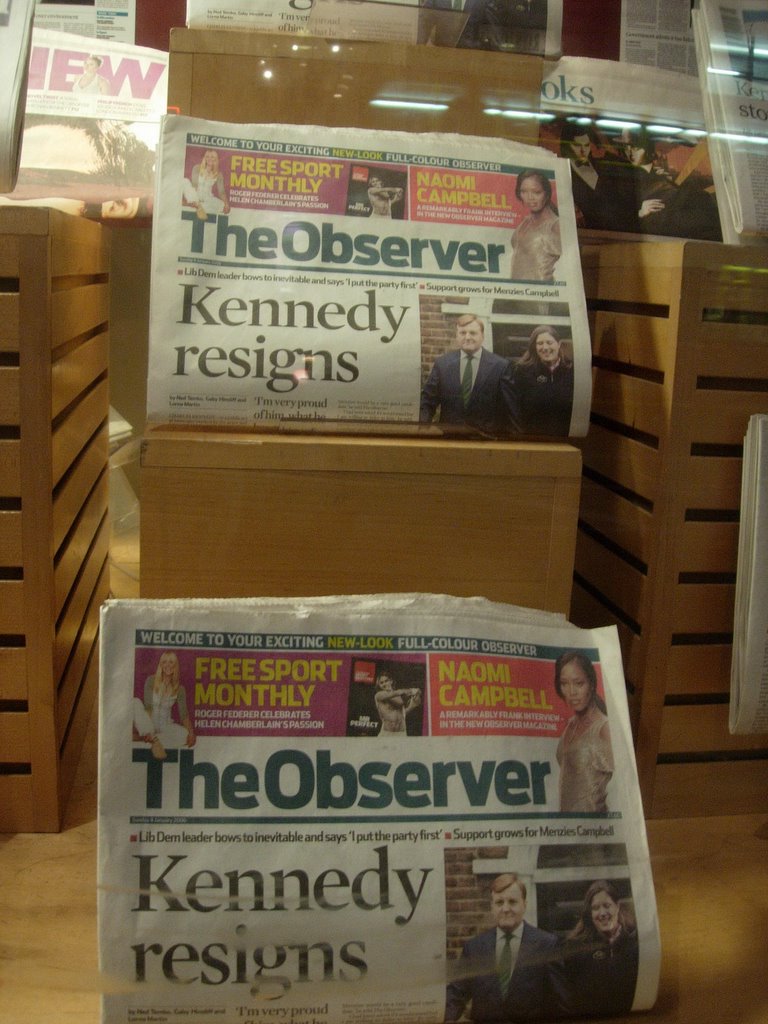
As The Observer Woos Readers With Tiny Hands, A Foolproof Tip For Increased Newspaper Circulation

At the weekend, the world's oldest Sunday newspaper, The Observer, gave in to modishness, and reduced the size of its pages in an effort to attract new readers. This rush to tabloid format is quite the thing with newspaper proprietors, and the evidence suggests that it works (with the exception of the poor, shrinking Scotsman).
Why this should be is a puzzle, though I have a theory that it may be linked to the epidemic of obesity. Chubby readers, already too big for their seats on the bus, have a reduced arm-span due to their excessive girth, and thus require their newspaper to be produced in miniature.
Naturally, whenever a broadsheet newspaper reduces its arm-span, the editor will make reassuring noises about how the change in format represents no dilution of the content, in which case it is, I suppose, a coincidence, that coverage of international events - and local ones - is invariably replaced with unconvincing paens to girlitude: how to stay slim without dieting; how dieting makes you fat; how fat is the new thin; how black is the new white; how to de-tox, re-tox, and generally get your bobbysox off, without passing "Go" (do not collect £200).
Having worked with more editors than there have been post-war Prime Ministers, I am somewhat cynical about these changes, and have long held to the view that a newspaper will flourish if it concentrates on providing news, and there is a lot of that around, still.
In Scotland, the traditional approach to falling circulation is to offer "free mince". This can be literally true, as it was in the case of the Sunday Scot, or figuratively so (the mince being represented by free guides to teuching through the ages, tiny hillwaking maps for tiny hillwalkers, or token-collect offers in which readers who sign up for a 50-year subscription will receive an engraved porridge spurtle.)
I understand that readers require their paper to provide something extra. For years, I urged my editors to follow the example of the excellent Puzzler magazine, and give their readers something to think about over their Grape Nuts. I am glad to see that they have now done this, and that it is impossible now to open a paper without tripping over a Japanese mindgame or two.
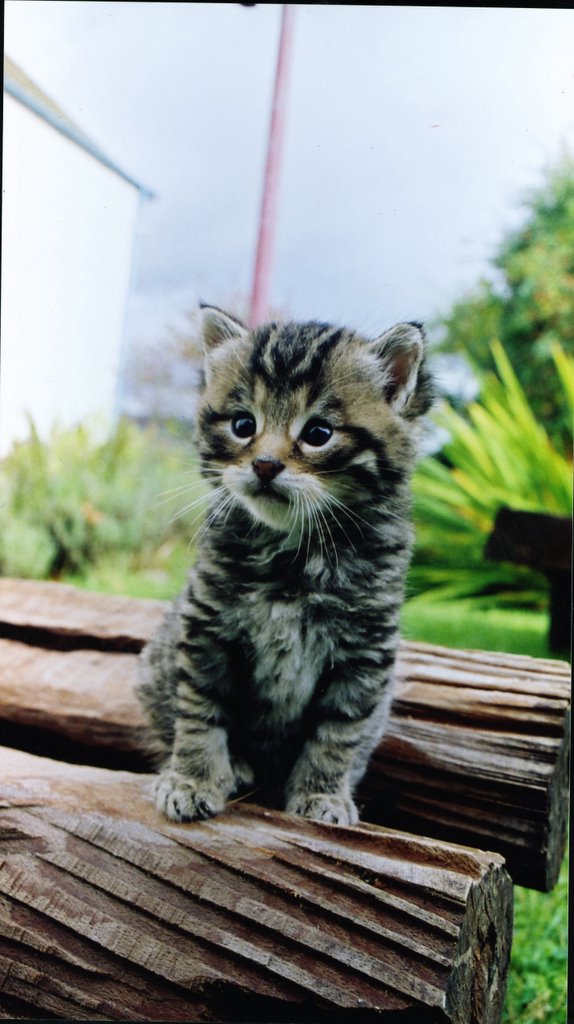
In which case, in the vain hope that it will stop the rot, I offer my second foolproof tip for increased circulation: cuddly animals, especially baby penguins, pandas, or lemurs. If all else fails, go for a kitten.

Sunday, January 08, 2006

Questionable Advice For Mr Charles Kennedy From The Advertising Robots Of Google


Regular readers of this journal may have noticed the small advertisements which appear at the top of the page. These exist to make running a "weblog" a commercial proposition, as well as a medical imperative. Every time a visitor clicks on the advert, the author of the web page qualifies for a payment.
True, it is not exactly a lucrative arrangement. In the last three months, I have earned an amount close to $2, though the contract with Google means that I will not be paid until I promise not to spend it all in one shop.
However, there is a certain satisfaction to be had in noting the changing content of the advertisements, which are generated by a computer, based on the content of the page. For some time, this page was carrying an advert for bereavement counselling. Momentarily, it was promoting ice sculptures. Two days ago, after publishing the item - below - about the political assassination of Mr Charles Kennedy, an advert for "Wheatsheaf Winter Breaks" appeared. "In Berwickshire, Scotland," it read. "Relax by crackling fire and sample single malt."
I have passed the information to Mr Kennedy, with Google's best wishes.

Friday, January 06, 2006

The Tweedy Weasels of the Liberal Party Are Knifing Mr Charles Kennedy Because They Fear Mr David Cameron, Not Because He Likes A Tipple

It is distressing, if not surprising, that Mr Charles Kennedy, the leader of the Liberal Democrats, should be brought low, not by drinking, but by a sudden outbreak of hypocrisy from his colleagues.
Facts in this matter are not easy to discern, but one or two seem reasonably self-evident. Mr Kennedy's colleagues knew about his drinking and conspired to keep it secret. Last November, when Mr Kennedy's self-control let him down, and he was - apparently - unfit to be seen in public, he was issued with an ultimatum: sort yourself out, or go. Mr Kennedy took the hint. He stopped drinking. He says he has not touched a drop for two months, and no one has contradicted this. So why have the Liberal Democrats suddenly decided to leak the the details of his medical condition and force him into highland exile? Surely it couldn't be because the Conservative Party has elected a young, telegenic leader who has been already been flirting with liberal policies? That would be cynical.

Wednesday, January 04, 2006

In Rebus, Mr Ken Stott Gives A Good Impersonation Of A Middle-Aged Man Adrift In A City Of Hairdressers

The recent television adaptation of Ian Rankin's Inspector Rebus books has been deemed a success, as it gained higher ratings than a film by Mr Steven Spielberg, in which Mr Leonardo DiCaprio pretended to be a pilot.
Much credit has gone to Mr Ken Stott, the grim-faced actor who played Rebus. Mr Stott replaced Mr John Hannah, who looked like a plumber who had forgotten where the ballcock was kept. Certainly, Mr Stott gave a good impression of a middle-aged man, and at times he even resembled a policeman. His characterisation was slightly more subtle than it was in his excursion as Herr Hitler, during last year's regrettable ITV drama Young Adolf.
This Rebus story was written by Mr Daniel Boyle, whose form as the author of improbable television detectives includes Hamish Macbeth, in which Mr Robert Carlyle inhabited a parody of a Scottish picture-postcard world, along with a Scottie dog called Jock.
The mock-postcard is one kind of Scottish drama. The other is urban, and is best characterised by Taggart, in which a dour detective polices a sanitised version of the "mean city" seen so often in the plays of Mr Peter McDougall.
Taggart represented the Glasgow bias of the Scottish media, and never more so than when the drama took place in Edinburgh; a city of hairdressers and wine bars in which the haggard and monosyllabic Chief Inspector could never find comfort.
About 15 years ago, when the Taggart franchise seemed to be running out of steam, STV tried to re-position itself by launching an Edinburgh drama called The Advocates, starring the son of the "Scottish Soldier" Mr Andy Stewart, and the actress, Ms Rachel Weisz, who appeared naked in a bath. Other than that, the most memorable things about the drama were the scene in which the son of Mr Stewart took a picturesque drive around Salisbury Crags, and the fact that Charlotte Square was under siege from a persistent bagpiper. It was a vision of Edinburgh which would not have surprised Taggart.
Mr Rankin's Rebus stories blend the misanthropy of Taggart with the pub yarns of Mr Irvine Welsh. Edinburgh is viewed as a tough, pretty city with an unsightly underbelly: a paunch of crime. On television, Mr Rankin's vision is softened slightly, and the capital becomes, once again, a city of hairdressers and rich folk with interesting French windows. Mr Stott gets to wear the paunch.
There were, I am sorry to report, some awful scenes, most notably the one in which Rebus impressed a lady friend by breaking into the stadium of Hibernian FC and turning the floodlights on as she stood in the centre circle. The lady, played by the delightful Ms Sharon Small, was then required to utter the line: "Rebus - if you ever dreamed of scoring at Easter Road, dream no more."
I was confused, too, as to why Rebus, while standing in Rutland Square, would demand a car to take him to the Oxford Bar. Even if this was a walk of more than 100 yards, the traffic restrictions in Edinburgh are of such complexity that the drive would have taken him halfway to Harthill.
And, yes, the piper from The Advocates was still there, wheezing away.

Tuesday, January 03, 2006

Professor Niall Ferguson Should Purchase A Mirror Before Asserting That Scotland Is Boring, Self-Absorbed And Educationally Sub-Normal

There is - with the possible exception of yesterday's bannocks - nothing as distasteful as an expatriate Scotsman denigrating his homeland from foreign shores. Mr Niall Ferguson, the intellectual Smallweed (and Laurence A. Tisch Professor of History at Harvard University), used the columns of the Sunday Telegraph to berate Scotland for, among other things, its "superiority complex". We must conclude that Mr Ferguson, despite his obvious vanity, does not possess a mirror.
But, still, his claims deserve examination.
First of all, he asserts that - on leaving Scotland for the spires of English academia in the early years of Thatcherism - he wittered on endlessly about the superiority of Scottish education, Scottish law, Scottish rugby, Scottish water, Scottish tweed, Scottish holidays. "I quoted Burns. I quoted Carlyle. I quoted the statistics that showed that Scottish regiments were the ones that did the real fighting in the First World War."
So, he was a bore.
But is it right to attribute this quality to the country he left behind? He then makes eight peculiar assertions, which are included here, in italics.
1. Scotland is a small, sparsely populated appendage of England. Those who called it 'North Britain' in the 18th century had it right.
Certainly, Scotland is attached to England, and some of it is sparsely populated. But if it is an appendage of England, shouldn't it be called "North England"? To assert that it is North Britain introduces the notion of Britishness, which is another thing entirely.
2. The weather is impossibly wet.
Perhaps Mr Ferguson does not understand the meaning of "impossibly". Either it is wet, or it isn't. The rain is possible. So is an umbrella.
3. Most of the land north of Loch Lomond is barren rock.
Perhaps Mr Ferguson was confused by the latest photographs of Mars from the NASA robot rovers, Spirit and Opportunity. The visual poetry of the Scottish highlands is not usually seen as a negative quality. Would a country full of factories and suburban bantustans of "executive housing" really be preferable?
4. Scotland lost its political independence 300 years ago and the creation of a Scottish Parliament, a glorified county council housed in a risible and over-priced folly of a building, has not restored it.
England also lost its political independence 300 years ago. The Houses of Parliament in London were over-priced, and considered by many to be an architectural folly. The Scottish Parliament may have limited powers, and it is housed in a building that looks like an explosion at a concrete factory (with added driftwood), but that does not negate the fact that the Scottish electorate voted for devolution. Indeed, the complaint that the Wee Parliament is a comparable to a county council is an argument for more devolved power, not less.
5. Educational standards in Scotland, once the highest in Europe, have - with a few exceptions - collapsed.
While it is to be regretted that today's pupils are not belted into submission by tawse-wielding sadists, there is no evidence for this assertion. Indeed, most debate on the collapse of educational standards is based on the problems of London.
6. When it comes to sport - and I do not count the one decent tennis player - Scotland is the Belarus of the West.

Should a mature nation measure its competence with reference to sporting success? I would contend not. Since the misplaced optimism of "Ally's Tartan Army", in 1978, Scots have developed an Olympian relationship to sporting achievement, celebrating participation and failure.
7. In fact, when it comes to just about everything, it is the Belarus of the West.
Mr Ferguson should, perhaps, visit Minsk, after he has completed a course of therapy for his obvious self-loathing.
8. That is why so many Scots emigrate. As I did.
See (7).

Sunday, January 01, 2006

A Hallucination Of Mr Roddy Martine Cradling A Giant Bannock Brings In The New Year

I went to bed early last night and dreamed. I dreamed I saw Mr Andrew Marr, in a kilt, interviewing Mr Roddy Martine, a socialite, about Scottish customs. Mr Martine was holding a giant bannock. It was, he said, a Pagan habit.
Resolution for 2006: do not eat cheese before retiring. Not even Toast Toppas.